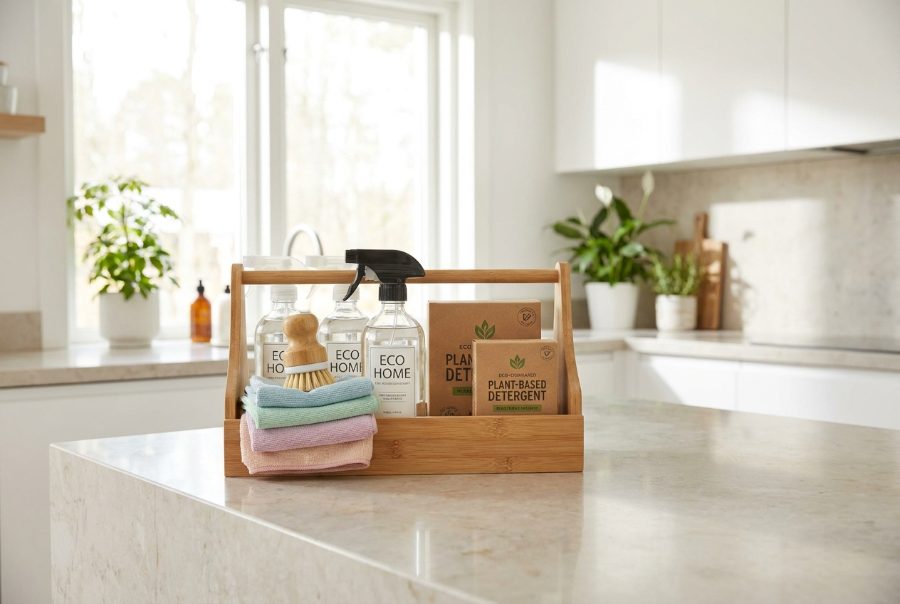
There is a difference between a bathroom that looks clean and one that is clean. It comes down to order and dwell time.
Most people clean their bathroom the same way every time. Spray some cleaner on the toilet, wipe down the sink, give the mirror a quick pass, and call it done. It looks fine. But if you have ever had a professional cleaner come through and then walked into that same bathroom afterward, you know there is a difference you can feel but cannot always explain.
The difference is not the products. It is the method, specifically the order and the dwell time. Professional cleaners do not spray and immediately wipe. They apply products strategically, let them work, and clean in a sequence that keeps them from re-contaminating surfaces they have already cleaned.
Start at the top, always
The first rule of professional cleaning is top to bottom. Dust and debris fall downward. If you clean the floor first and then dust the light fixture, you have just dirtied the floor again. In a bathroom, that means starting with the exhaust fan cover (a surprising amount of dust collects there), then the top of the medicine cabinet or mirror frame, then working your way down.
Before you touch anything else, spray your toilet bowl cleaner inside the bowl and let it sit. This is the step most people skip. Toilet bowl cleaner needs time, at least 10 minutes, to break down mineral deposits and kill bacteria. While it sits, you clean everything else. By the time you come back to scrub the bowl, the cleaner has done most of the work for you.
The shower and tub, where most people give up
Soap scum is a combination of soap residue, hard water minerals, and body oils that has bonded to your tile and glass. It does not come off with a quick spray and wipe. You need a product with acid, white vinegar, citric acid, or a commercial soap scum remover, applied and left to sit for at least five minutes before scrubbing.
For grout, a stiff-bristled grout brush and a paste of baking soda and dish soap applied in circular motions beats most commercial grout cleaners. The abrasion matters as much as the chemistry. If you have dark grout staining that does not respond to mechanical scrubbing, a diluted bleach solution (one part bleach to four parts water) applied with an old toothbrush and left for 10 minutes will lift it. Rinse thoroughly afterward.
Showerheads collect mineral deposits, especially in South Florida where the water is hard. Fill a plastic bag with white vinegar, secure it around the showerhead with a rubber band so the head is submerged, and leave it for an hour. The mineral buildup dissolves and the water pressure improves noticeably.
The toilet, the part everyone rushes
By now your toilet bowl cleaner has been sitting for 10 minutes. Before you touch the bowl, clean the outside of the toilet from top to bottom: the tank lid, the tank, the handle, the seat (both sides), the bowl exterior, and the base. Use a disinfectant spray and a microfiber cloth, and work from the cleanest part to the dirtiest, which means the base and the area around the floor bolts get cleaned last.
Then scrub the bowl. Pay attention to under the rim, where mineral deposits and bacteria collect and where most people do not scrub. A good toilet brush with an angled head makes this easier. Flush to rinse.
One thing professional cleaners do that most people do not: they wipe the base of the toilet and the floor around it with a disinfectant cloth every single time. That area collects more bacteria than almost anywhere else in the bathroom, and it is almost always overlooked.
Mirrors and glass, the streak problem
Streaky mirrors are almost always caused by one of two things: too much product, or wiping with a dirty cloth. Professional cleaners use a small amount of glass cleaner, a few sprays, and a clean, dry microfiber cloth. They wipe in an S-pattern from top to bottom, not in circles. Circular wiping just moves the residue around.
If your mirror has a lot of toothpaste splatter or hairspray buildup, wipe it first with a damp cloth to remove the bulk of it, then follow with glass cleaner. Trying to cut through heavy buildup with glass cleaner alone is what causes streaks.
The floor, last, always
Sweep or vacuum the floor before mopping. Mopping over dry debris just turns it into wet debris that sticks to the floor. In a bathroom, a spray mop or a bucket and mop with a disinfectant floor cleaner works well. Pay attention to the corners and behind the toilet, which tend to collect hair and dust that a standard mop pass misses.
Let the floor dry completely before walking on it. In a South Florida bathroom, this usually takes about 10 minutes with the exhaust fan running.
The details that separate clean from really clean
Cabinet hardware, towel bars, and toilet paper holders collect fingerprints and grime that most people never wipe. A quick pass with a disinfectant wipe takes 30 seconds and makes a visible difference. Light switch plates are another one. They are touched constantly and almost never cleaned.
Replace your hand towels and bath mat after every deep clean. No matter how well you have cleaned the surfaces, a damp, used towel hanging on the rack undermines the whole effort. Fresh linens are the finishing touch that makes a bathroom feel genuinely clean rather than just scrubbed.